
Editor’s Note: This is a fascinating story that appeared on the FBI’s website this week about a $43 Million Ponzi Scheme in Sparta, Tennessee. Tractor salesman Jeff Gentry preyed on the implicit trust of friends, family, and neighbors in this small Tennessee town.
Jeffery Gentry, 40, pleaded guilty in federal court last August to charges related to his $43 million scheme that bilked investors—including friends, family, neighbors, and fellow parishioners—out of more than $10 million. Gentry, who owned and operated Gentry Brothers Tractor Supply and Gentry Auto in the Middle Tennessee town of Sparta, was sentenced on May 14 in U.S. District Court in Nashville to three years in prison. He was also ordered to pay $10.4 million in restitution to his victims.
“He kind of preyed on that aspect of it,” said Jeff Guth, chief of the Sparta Police Department in White County, a close-knit rural community of 26,000 residents where the median household income is about $36,000. “Most of these people were friends of his. A lot of them went to church with him. They wouldn’t believe that someone close to them like that would be doing that.”
Guth learned of the scheme a few days before Christmas in 2016, when the police station lobby filled up with distraught investors fearing they had been duped. Gentry’s tractor store—an informal gathering spot where many of the investment transactions occurred—had shut down without explanation, suddenly casting doubt on their guaranteed returns. At the police station, former farmers and other retirees waved handwritten statements revealing their six-figure outlays, much of it from savings and retirement accounts. Suspecting there would be still more victims, Guth called the FBI in nearby Cookeville—a satellite office of the Bureau’s Memphis Division—for support.
“He said he had some people in his office who felt they may have been the victim of a crime,” recalled FBI Special Agent Traci Lovell. “I don’t know if they used the term ‘Ponzi scheme,’ but their money had been stolen—a large amount of money.” Lovell and fellow agent Ric Fagan began interviewing more than 50 victims who had invested as far back as 2012. The picture that emerged was a typical pyramid scheme: Gentry’s initial investors may have seen promising returns early on, but without new money coming in—to pay investors their guaranteed returns and support Gentry’s increasingly lavish spending—the ruse ultimately fell apart, leaving many underwater and angry.
“That was a hard day for a lot of people, because they were finally coming to the realization that they had been duped and that they would be lucky if they got anything back at all,” Guth said.
In addition to funneling investor cash into real estate, livestock, vehicles, and farm equipment, Gentry spent $365,000 in March 2016 to launch a used car business, Gentry Auto, in Sparta. “He sold for a living,” said Special Agent Fagan. “He could talk to people. Just what every scam artist needs is the ability to convince you that giving me your money is the best thing to do.”
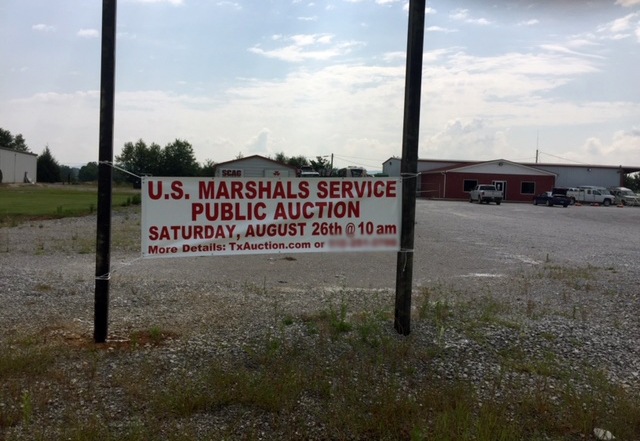
“Many of them, they are never going to see the amount that they had put into it,” Guth said. “But they will be able to benefit from some of it. And some of it may be better than nothing at all.”
The FBI agents said secrecy was a key element of Gentry’s ploy—as it is in most Ponzi schemes. Potential investors are lured into thinking they are lucky to get access to this kind of lucrative investment, and that if too many people know about it, their own windfall might be diluted. The air of secrecy also keeps victims from swapping notes, which can reveal inconsistencies and irregularities. That’s what happened in Sparta.
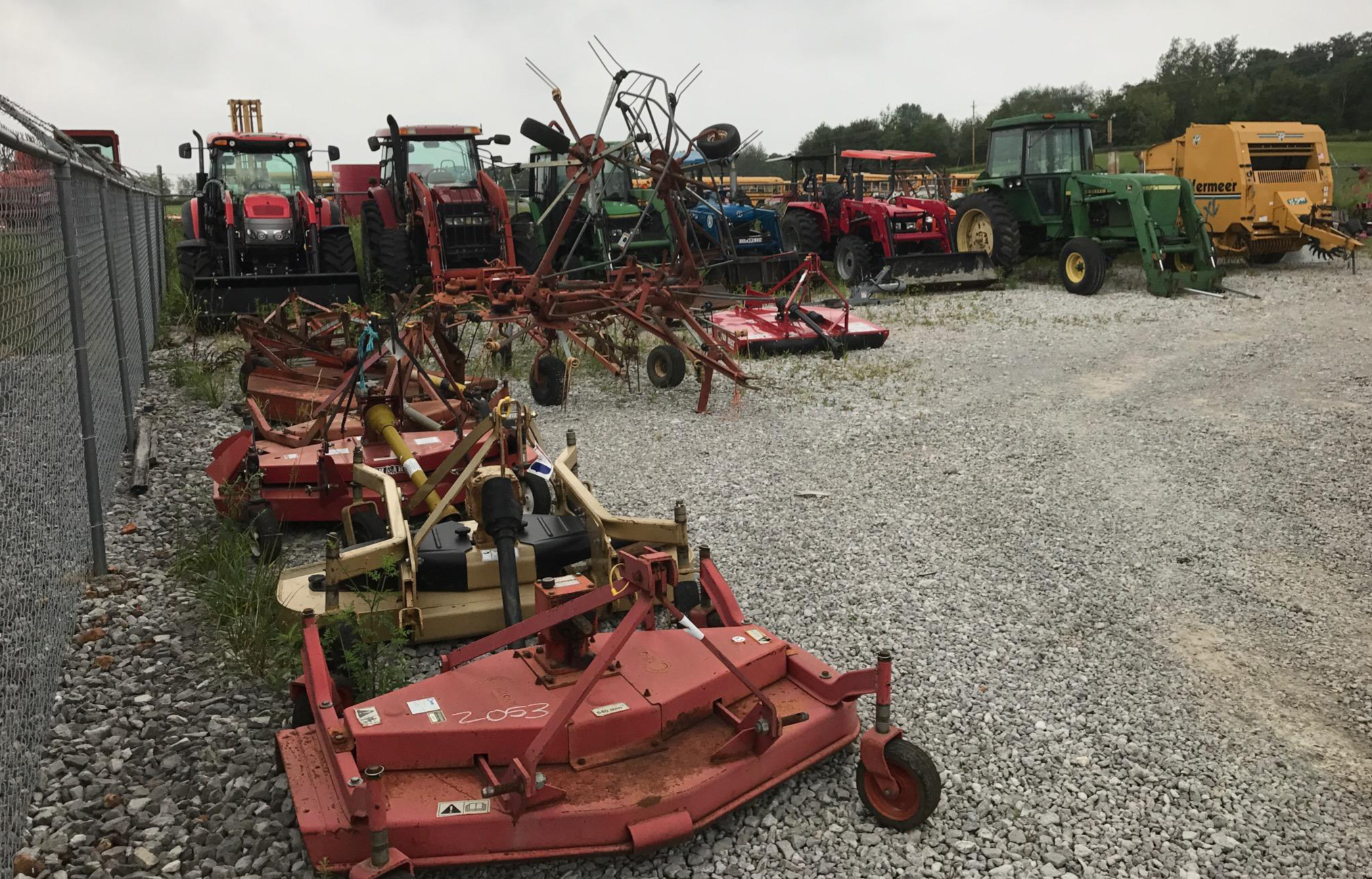
Tractors and mowers were among Jeff Gentry’s seized assets auctioned last summer by the U.S. Marshals Service. The resulting $1.3 million in proceeds will go toward restitution for victims of Gentry’s investment scheme.
“When the victims started comparing notes, they realized the basis of this scam was implausible,” said Lovell, referring to the sheer volume of tractors Gentry would have needed to sell to justify what he promised investors. “The victims can see in hindsight how ludicrous it was to believe that this scheme was true.”
In hindsight, there were warning signs: guaranteed high returns, secrecy, and a fundamentally flawed investment model. Investigators cautioned anyone entering into an investment opportunity to do their homework before handing over money. “If someone tells you to keep it a secret, that should be a red flag,” Fagan said. “If someone uses the words ‘guaranteed return,’ that should be a red flag. If a contract you’re looking at doesn’t make sense, ask more questions and try to understand it. Don’t make yourself an easy target.”
Guth said some victims, including retirees on fixed incomes, lost their life savings. Their trust and faith has also been tested. “People are more on guard than they were before, and they are probably having a hard time trusting anybody,” he said. “It was hard to take. But being a small, close community, I think people have kind of wrapped their arms around some of these people [who were victims]. I’m sure it’ll take a while, but we’ll get through this.”
What is a Ponzi Scheme?
Ponzi schemes promise high financial returns or dividends not available through traditional investments. Instead of investing the funds of victims, however, the con artists pay “dividends” to initial investors using the funds of subsequent investors. The schemes generally fall apart when the operators flee with the proceeds or when a sufficient number of new investors cannot be found to allow the continued payment of “dividends.”
This type of fraud is named after Charles Ponzi of Boston, Massachusetts. In the early 1900s, Ponzi launched a scheme that guaranteed investors a 50 percent return on their investment in postal coupons. Although he was able to pay his initial backers, the scheme dissolved when he was unable to pay later investors.
Tips for Avoiding Ponzi Schemes
- Be careful of any investment opportunity that makes exaggerated earnings claims.
- Exercise due diligence in selecting investments and the people with whom you invest—in other words, do your homework.
- Consult an unbiased third party—like an unconnected broker or licensed financial adviser—before investing.
